Design the floor for the day after opening
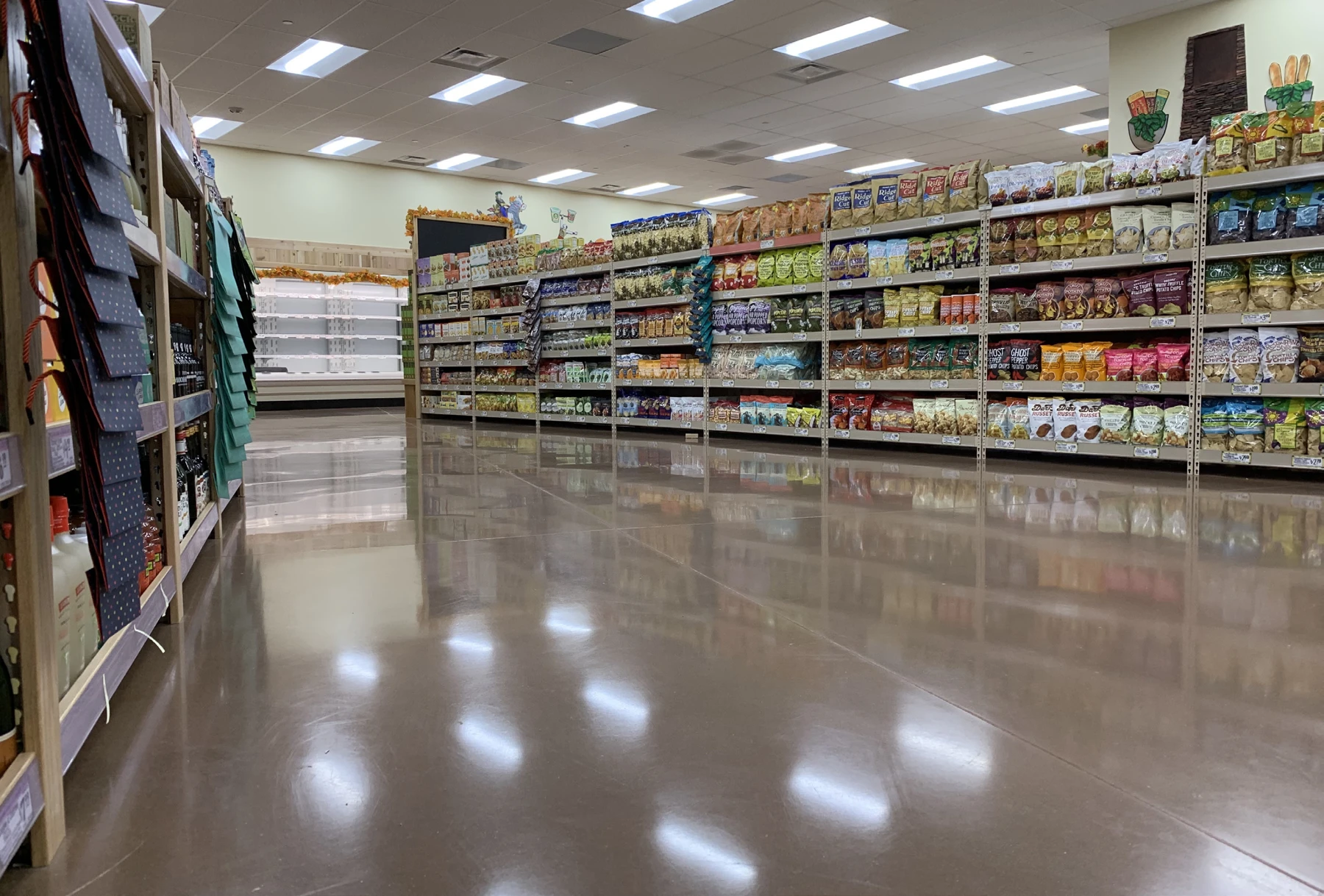
A retail floor is seen in the showroom light but lives with shoes, grit, trolleys and spilled coffee. Walk the entrances with the operator before selecting the finish. A successful sample answers two questions: does it look right, and can the site team keep it that way?
Public concrete floors need more than an attractive opening-day finish. Shoes bring grit and moisture, displays move, and spills must be cleaned while the building is in use. Start with the operating conditions, then choose the aggregate exposure, sheen and protective treatment that can be maintained by the site team.
What the crew brings to site
A concrete grinder does the cutting when the surface needs levelling or deeper aggregate exposure. An edge grinder reaches walls and columns. The machine and tooling are selected together for the slab, not simply by motor power.
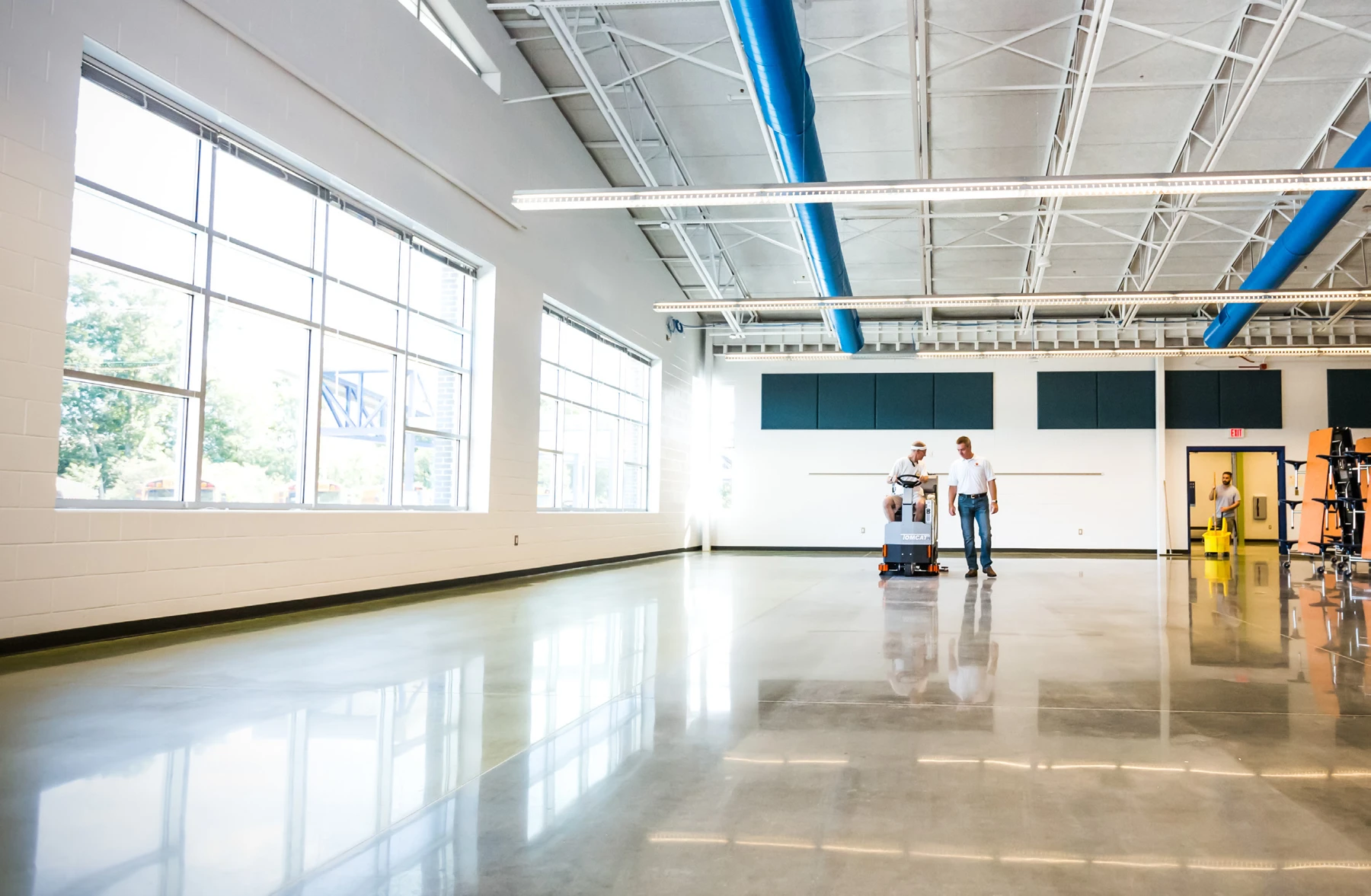
On suitable surfaces, C² Power Polish offers another route: C² Diamonds resin discs fitted to compatible power trowels, scrubber-dryers or swing machines. Check the mounting, speed and wet/dry compatibility before starting. A finishing system is not a substitute for deep stock removal.
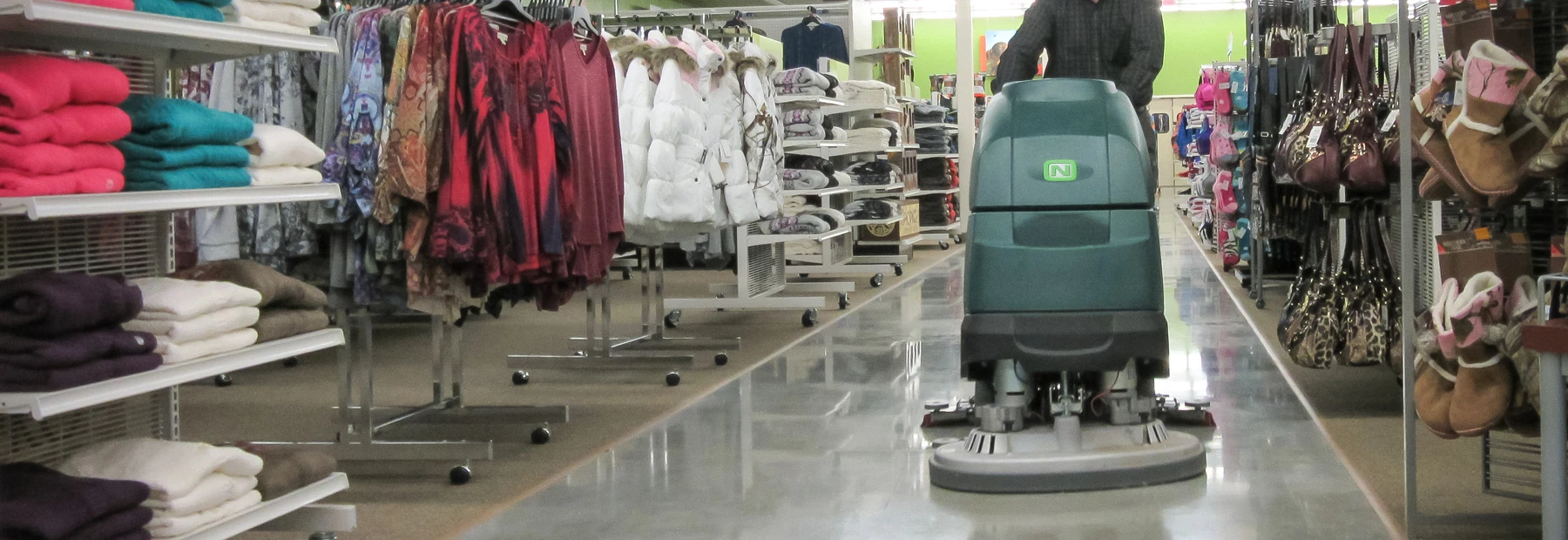
The less glamorous kit matters too: appropriate dust extraction for dry work, slurry collection for wet work, a scrubber-dryer for cleaning between stages, a low-pressure sprayer and clean microfiber applicators. Keep clean tools separate from the grinding area.
Read the surface, then choose the disc
Think of a disc number as a step, not a promise of gloss. Coarser tooling opens the surface; finer tooling refines the scratches it leaves. Metal-bond tools are used for removal, while resin tooling develops the finish. Concrete hardness, the tool bond and the machine all influence the cut. Choose the initial grit on a trial area and check tool wear early; do not copy a sequence from another slab blindly.
The route for this floor
Choose the preparation equipment from the slab condition, then the abrasive route from the approved exposure and sheen. Match the edge finish to the open floor. For protection, a matte route and a glossy route need different procedures: Ultra Matte is not burnished; other products follow their own finishing instructions. At handover, demonstrate the cleaning machine and a compatible pad. A diamond maintenance pad is not automatically suitable for every protective finish.
#50 → #100 → #200, wet · suitable C² densifier · #400 → #800 → #1500, wet or dry · compatible protection.
This is one manufacturer route for suitable concrete, not a compulsory recipe for every floor. Agree the starting point and stopping point on the sample. Coloured floors follow the Tint instructions; a matte finish does not require chasing the highest grit.
What a good pass looks like
Work in manageable areas with even, overlapping passes. At each change of abrasive, remove loose grit and inspect a clean patch under low-angle light. A remaining coarse scratch needs attention now: a finer disc may make the surrounding concrete shine without removing it. Treat the perimeter to the same visual standard as the middle. Machine speed, pressure and travel rate come from the equipment and tooling instructions, then are confirmed on the test area.
How this floor is made
- 01
Assess and agree
Map entrances, circulation routes, food areas and wet zones. Assess the existing concrete and agree sample areas under the final lighting. Specify slip requirements and accessibility separately from appearance. Plan work zones, drying and reopening with the operator.
- 02
Prepare the surface
Prepare, repair and mechanically refine the surface to the chosen appearance. Treat suitable pinholes during grinding with C² Pin Fix where needed. Select a C² densifier for the substrate, then continue the agreed sequence; a decorative colour route follows its own product-specific order.
- 03
Build the finish
Choose protection for the expected spills and finish. C² Ultra Seal is one possible route for concrete exposed to accidental spills; C² Ultra Matte is an alternative when a matte look is required. Their application and finishing instructions differ, so they are alternatives to assess, not interchangeable steps.
- 04
Protect and maintain
Set up entrance dirt control and a written cleaning plan. Remove abrasive debris regularly and clean spills promptly with the suitable C² cleaning system. Check wear in traffic lanes and plan renewal of the protective treatment according to actual condition.
Floor and process examples